Keynote Speakers
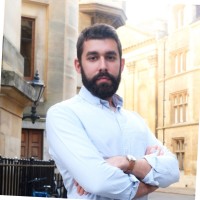
Foundation models for health signals
The unprecedented success of foundation models has transformed our understanding of artificial intelligence, yet their application to personal health and ubiquitous sensing remains a complex frontier. In this talk, I will share my journey in building AI for health monitoring, starting with early efforts to improve data efficiency, robustness, and fairness through self-supervision. A key milestone in this journey was the development of PaPaGei, the first open foundation model for photoplethysmography (PPG). While PaPaGei demonstrated the utility of pre-training on various biosignal datasets, the rigorous demands of real-world applications, such as accurate activity recognition, heart rate, or other biomarker monitoring in dynamic environments, highlight the need for even greater generalization and scale. These challenges motivate the transition to Large Sensor Models that address these hurdles by scaling up both model size and the diversity of user data. This scaling unlocks emergent benefits that smaller models cannot achieve, positioning such foundation models to become the backbone of any future sensing task.
Biography
Dimitris Spathis is a research scientist at Google and a visiting researcher at the University of Cambridge. His work enables AI to handle the messiness of the real world through data-efficient and robust machine learning, with a focus on building foundation models for health. He is particularly interested in the following areas:
AI for Sequential & Multimodal Data: Developing and releasing AI models that make the most of fine-grained person-generated data through self-supervised learning [ICLR'25, CHIL'21], multimodal fusion [WSDM'24], forecasting [KDD'19 oral], and knowledge distillation [UbiComp'21].
Accessible Health Sensing: Building AI systems that detect vital health information without specialized equipment, with applications to disease monitoring [NeurIPS'21], cardio fitness [Nature Dig. Medicine'22], sleep disorders [Sci. Reports'22], and more.
Robust & Trustworthy AI: Development of reliable ML algorithms for high-stakes applications, focusing on out-of-distribution generalization [ML4H'22, ACLw'17], addressing forgetting [WACV'24], fairness [KDD'24], and ethical considerations [JAMIA'21].
Previously, he was a senior research scientist at Nokia Bell Labs, leading efforts in AI for multimodal health. Before that, he completed a PhD in Computer Science at the University of Cambridge, working with Prof. Cecilia Mascolo. During his studies, he worked at Microsoft Research, Telefonica Research, and Ocado. He also helped start COVID-19 Sounds, one of the largest studies in audio AI for health.His research has been published in top venues in artificial intelligence, AI for health, and human-centered signal processing while recent projects have been featured in international media such as the New York Times, BBC, CNN, Guardian, Washington Post, Forbes, and Financial Times.
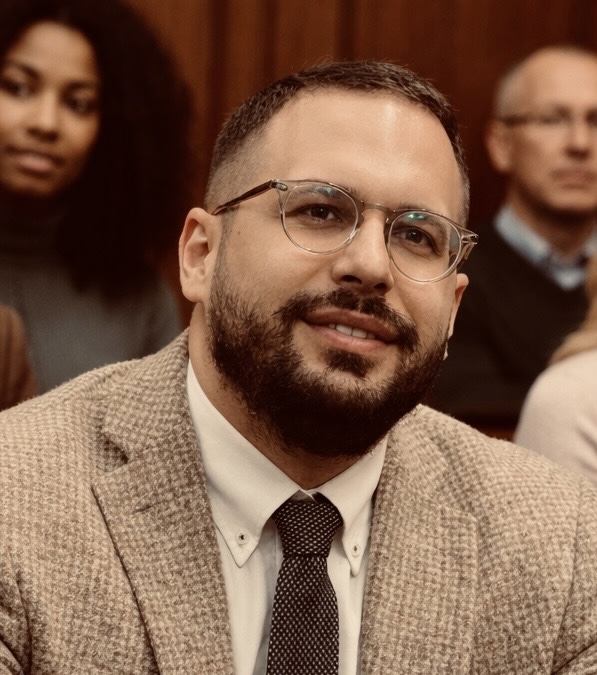
Bioethics and Computational Data
The purpose of the presentation is to foster an understanding of bioethical dilemmas and the proper use of computational data within the contemporary digital environment. Emerging challenges in the field of law, along with the need for the responsible use of artificial intelligence, highlight the imperative to reform the institutional framework governing the management of information data within this dynamic and uncertain technological landscape.
Biography
Panagiotis–Charalampos Doumas is an Athens-based lawyer with a strong research and academic profile in the fields of Public Law, Bioethics, and Law & Technology. He is a PhD candidate at Panteion University, Department of Public Administration, specializing in the intersection of Bioethics and Public Law. His academic background includes degrees in Law and Political Science from the National and Kapodistrian University of Athens, as well as postgraduate studies in Public Law and Public Policy.
His doctoral research focuses on the legal and ethical dimensions of artificial intelligence, as well as on the regulatory role of bioethics in the context of rapid technological advancements. He has published in academic journals and conference proceedings on topics related to bioethics, data protection, and the impact of technological innovation on public administration. He also actively participates in conferences and academic forums addressing ethical technology, data security, and the regulatory challenges posed by artificial intelligence.
Since September 2025, he has been serving as Legal Advisor at the Ministry of Digital Governance, within the General Secretariat of Telecommunications and Post, contributing to legislative drafting and policy formation in areas related to telecommunications, radiofrequency management, and the regulation of artificial intelligence applications in the contemporary digital environment.
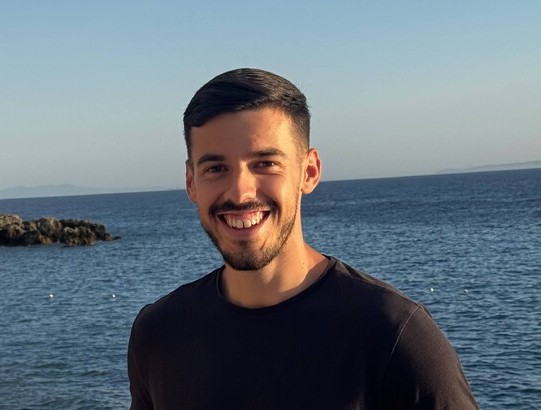
Ambient Intelligence in Extreme Environments
A presentation will be held, showing a current research project conducted by the Darmstadt University of Applied Sciences in cooperation with the European Space Agency. The field of research is applying Ambient Intelligence (AmI) in the domain of space exploration, particularly in the context of moon exploration, where AmI can serve as a digital buttler supporting astronauts.
The presentation aims to give an overview about the current research, AmI the context of Isolated, Confined and Extreme Environments and challenges faced in interdisciplinary projects.
Biography
Lorik Gashi is a research assistant and PhD student at Darmstadt university of applied sciences. As part of his postgraduate studies, he conducted a semester abroad at the computer science department of the Ionian University. His current work focuses on applying Ambient Intelligence to Extreme Environments, particularly in the space domain. The research project he is a part of works closely together with the European Space Agency.
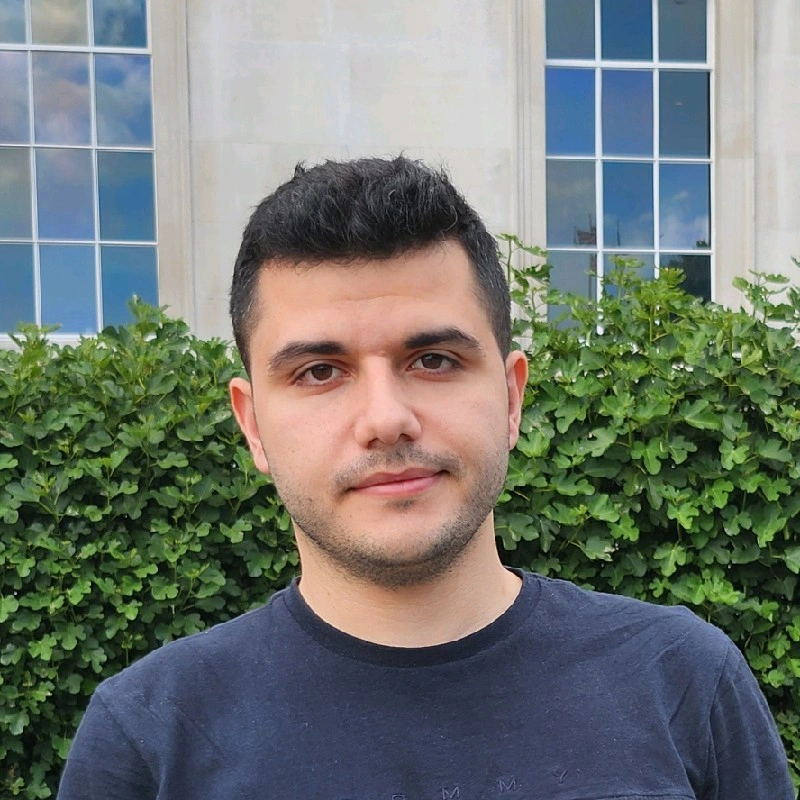
Agentic AI in Practice: Capabilities, Costs, and Impact on the Labor Market
The discussion surrounding Generative and Agentic AI has dominated both public discourse and corporate strategies, yet the true nature of the technology often remains unclear. The capabilities of AI agents are often confused with the expectations surrounding them, while their actual costs and limitations are rarely discussed honestly.
In this workshop, we will explore how modern AI agents function and are trained, starting with the fundamentals of large language models and progressing to agentic systems that utilize tools, memory, and a degree of autonomy. Particular emphasis will be placed on the training process and the role of data: how it is collected, how it is evaluated, and how it influences a model’s final behavior, as well as why data quality and human supervision remain, perhaps more than ever, critical success factors.
The discussion then shifts to the more practical side: how much it actually costs to use such systems in a production environment, why replacing a worker is not always the most cost-effective option, and why many large organizations choose to build their own closed systems rather than rely on external services.
Biography
Apollon-Foivos Bakis is a graduate of the Department of Finance and Banking Administration at the University of Piraeus and holds an MSc in Quantitative Finance from the University of Manchester. He is a co-founder and lead engineer at Alysis AI, a startup developing Generative and Agentic AI services. Previously, he worked at Mercor as a Senior Reviewer, evaluating data for the training and improvement of large language models. His interests focus on the development and evaluation of AI agents, the use of open-source models, and bridging artificial intelligence with real-world, economically viable applications.

Digital Transformation and Academic Tech Startups: How IT Tools Support Innovation and Sustainability
The presentation examines the role of digital transformation and IT tools in fostering innovation and sustainability among academic tech startups. It focuses on the key challenges faced by university initiatives, such as uncertainty, the commercialization of research knowledge, and market engagement, and highlights the role of information systems, data analysis, artificial intelligence, and digital twins as support mechanisms. At the same time, it underscores the importance of the topic for computer science students and young researchers, within the context of academic specialization and innovative university initiatives.
Biography
Evangelia Zoi Akritidi is a PhD candidate in the Department of Informatics at Ionian University and a member of the administrative and financial staff at the National Technical University of Athens. She holds a degree in Business Administration and a Master’s in Economics of Education and Management of Educational Units. Her research focuses on innovation and entrepreneurship in academic and research spin-offs, particularly the roles of knowledge transfer, commercialization, digital transformation, and Digital Twins, as well as the institutional and policy factors that influence their development and long-term sustainability.
Interview Simulation Workshop
Biography
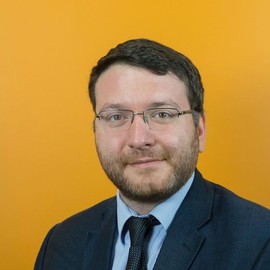
Nikolaos Korfiatis is a Professor in the Department of Informatics at the Ionian University, specializing in Data Management. He received his undergraduate degree from the Athens University of Economics and Business (2004), continued with postgraduate studies (MEng) at the Royal Institute of Technology (KTH) in Stockholm, Sweden, and obtained a PhD from Copenhagen Business School (2009). He then worked as Assistant Professor in Experimental and Behavioral Economics at the Department of Economics, University of Copenhagen (Denmark), and as Lecturer (2009–2014) in Information Systems and Databases at Goethe University Frankfurt (Federal Republic of Germany). Subsequently, he served as Assistant, Associate, and Full Professor at the University of East Anglia (UEA), Warwick Business School, and the University of Nottingham, where he retired and later joined the faculty of the Department of Informatics at the Ionian University.
Presentation of Research Laboratory CMODLab
Biography
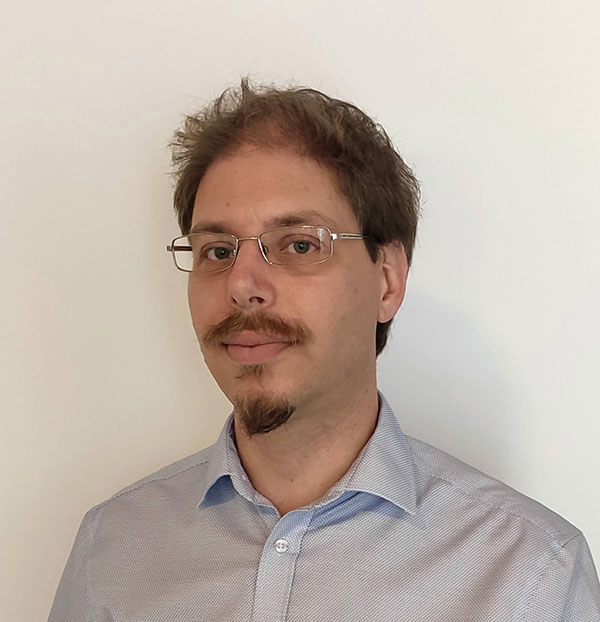
Dr. Ioannis Karydis holds a BEng in
Engineering Science & Technology from Brunel University, UK (2000),
an MSc in Advanced Methods in Computer Science from Queen Mary
University, UK (2001) and a PhD in Computer Science from the dept. of
Informatics of Aristotle University of Thessaloniki, Greece (2006).
Research Interests
- Musical genre classification
- Voice separation in polyphonic music
- Continuous querying in musical streams
- New media cultural informational systems
- Music information retrieval user interface design
- Musical data similarity using contextual information
- Musical data management in p2p networks
- Internet of Multimedia Things (M-IoT / IoMT)
- New media co-creational systems
- Collective intelligence in new media